
Review Date: 22/06/26
Reviewed by: Alison Cook. ForWhen Clinical Lead. Perinatal and Infant Mental Health Occupational Therapist.
Dads play a crucial role in the healthy development and wellbeing of young children. Having a father who is involved with the day-to-day care and activities with a baby helps grow healthy relationships and aid them to reach their full potential.
In order for this to happen dad’s need to be able to look after their mental health and wellbeing. Men’s mental health is an important issue that is often overlooked. Depression in fathers is a significant but under-recognised aspect of postnatal mental health, affecting many families and requiring greater awareness and support. Thanks to an increase in awareness and funding, we are beginning to talk more about male postnatal mental health in Australia.
Quick takeaways:
- Up to 1 in 10 Australian fathers experience depression in the perinatal period; anxiety often co-occurs.
- Screening usually involves a few quick questionnaires and a chat with a health professional or GP– it isn’t a diagnosis.
- Early help improves outcomes for the whole family; your GP can organise a Mental Health Treatment Plan for psychology rebates.
Yes, postnatal depression in men is very real
You’re expecting a baby. You’ve become excited for future games of soccer in the park, the years of dad jokes ahead of you and the soon to be squeals of excitement from bath time splashing. Friends are posting on Facebook and Instagram photos of happy moments with their children, daily smiles and trouble-free family outings. You begin to prepare for a seamless entry into the role of a fatherhood.
Many know that up to 1 in 5 women may experience depression or anxiety during the early stages of parenting however the risk for men also developing postpartum depression is also common. Maternal depression is a known risk factor for developing postnatal depression in fathers, highlighting the close connections within a family, especially during the perinatal period.
Also referred to as antenatal, perinatal or postnatal depression (PND), these all refer to mental health conditions that occur during pregnancy or following the birth of a child.
Many question “Can men get postnatal depression”? given it’s the woman who experiences the physical experience of childbirth. In fact, 1 in 10 men experience paternal depression in the postnatal period. Men’s postpartum depression symptoms can often go undiagnosed due to the differences in presentation and traditional attitudes toward masculinity.
Dads often say they get angry easily or they have withdrawn from seeing friends. To help start finding out more you might be asked something like “Becoming a parent is a really big transition, there are so many things changing at this time. What do you notice is going for you at the moment?” – Alison Cook
Postnatal depression in men often goes undiagnosed
For generations, the notion that men should show no emotions, fix all problems and ‘get on with it’ has been widely adopted. This needs to change. We need to create a community where “It’s OK, to not be OK”. Only with this acceptance, can we begin to reverse the expectation that men should suffer in silence.
We find that often it’s women who are asked about their mental wellbeing and are encouraged to access perinatal support for themselves and their baby, therefore postnatal depression is diagnosed more commonly – in birthing parents. Fathers are just not asked about how they are going adjusting to their new role as a parent.
Communities often disregard father’s mental health during early parenthood and are likely to have not heard of paternal perinatal depression. Many men may feel ashamed that they have symptoms of depression or anxiety at a time when they are expected to be excited and be supportive of their partner who has just given birth. Unfortunately, this may lead to a deterioration in their mental health and possible withdrawal from family and friends.
Dads are often hesitant to access Perinatal and infant mental health (PIMH) services as they don’t see themselves represented in the service eg. service names, websites, flyers etc are mother focused. Services can remove this barrier by making simple evidenced based changes eg. Follow Healthy Male/ Plus Paternal guidelines. – Alison Cook

What causes paternal postpartum depression in men?
Despite men not experiencing pregnancy or physical birth, they too are going through a life changing event of transitioning to parenthood. No matter the circumstances, adjusting to parenthood can be stressful and emotional. We also know that illnesses like depression and anxiety can appear to come out of the blue when a new baby is added into the mix of life.
After having a baby, your routine is likely to have significantly changed. Changes in family structure, such as new roles and responsibilities, on top of sleep changes, can contribute to stress and adjustment difficulties for new fathers.
New fathers – getting into a new life routine
Many fathers often report having never held a newborn until their own has been born. The daily care of a baby and its practical tasks are foreign and require learning. The worry of ‘getting it right every time’ can be at the forefront of parents’ minds.
The worry of a baby’s cry and how to settle them can make any parent flustered, let alone waiting and wondering when their baby will next wake up, which can impact parental sleep and daily activities. Excessive worry about the baby’s wellbeing or routines—such as persistent concerns over their health or caretaking rituals—can be a sign of underlying anxiety in new fathers.
. Often fathers are required to return to work soon after the birth of their baby to support the family financially, and this can lead to feelings of missing out with their newborn and having to juggle their competing work tasks, supporting their partner and looking after themselves. While learning the ropes of being a new parent, relationship stress after having a baby is also completely normal.
Misunderstandings and conflict often arise, when navigating your role as a father, adjusting to a change in lifestyle or managing financial stress. It can be helpful to plan ahead for these issues and talk about how you can negotiate the tricky balance of work, household chores, meals, caring for the baby and squeezing in some time together and also time for each parent to get a break. It’s a good time for listening to each other and remaining supportive of each other’s feelings and suggestions.
[Expert insight] A practical settling tip you teach on calls that reduces stress in the next 24–48 hours, and how you explain “good enough” caregiving.
Becoming a parent is hard, especially when you are not feeling confident when baby cries. It’s important to know that as parents, it is our job to support our children through their crying, rather than always ‘fixing’ or stopping them from crying. Our role is to be the anchor to their storm. When we can stay calm and sooth our baby with gentle talking, touch, and movement, they are learning that they feel safe and that whatever is going on for them will be okay.
If your baby is unsettled and it is feeling difficult, a change of scenery can do wonders for you both. Mix it up- pop them in the pram or carrier and go for a walk, run a bath for your baby, put some music on, take your baby outside etc. – Alison Cook
Hormonal changes
Despite not giving birth themselves, men also experience hormonal changes during their preparation and entry into fatherhood. Testosterone in men drops a few months prior to the birth of their baby and then increases again a few months after birth. This reduction in testosterone can be associated with depression in men. Men tend to be focusing on their partner and their hormone fluctuations and neglect changes in their own self.
Key Highlight
Male PND is often misunderstood & under-diagnosed, 1 in 10 men experience paternal depression in the postnatal period.
Risk factors for paternal depression and anxiety disorders
Some men have additional vulnerabilities that increase their chances of developing depression or anxiety in the perinatal period.
- Has a history of anxiety, depression or other mental illness, which can increase vulnerability to depression during the perinatal period
- Has limited support practically and emotionally
- Experienced a traumatic birth or have a baby with additional health needs
- Has current or previous issues with drugs or alcohol
- Are experiencing financial stress
- Has a partner who is experiencing depression or anxiety
- Struggle to talk about their feelings and seek support
Recognising risk factors and symptoms
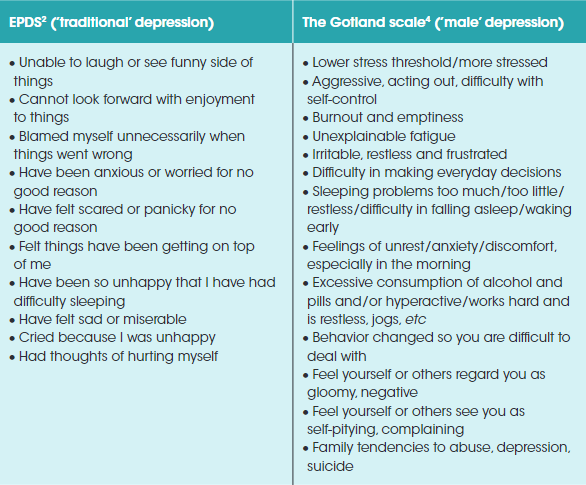
Recognizing anxiety and depression symptoms and getting support early can lessen the severity of perinatal depression or anxiety. There are screening tools such as the Edinburgh Postnatal Depression Scale (EPDS) can help with early identification and accurate diagnosis by a qualified professional.
If you feel that you are not feeling your usual self and are not able to do the things that you need to do to look after your family, talking to your GP is a great place to start. You can also join support networks such as local or online Dads Groups or get regular, helpful information from SMS4Dads.
Talk to your partner about paternal depression and develop a plan of how you will support each other.
What are the symptoms of postnatal depression in men?
Depression symptoms in new fathers can be different to those experienced by women, and as always will vary person to person. Depression can also be experienced at the same time as anxiety. It could look like: Changes in appetite by either eating more or less than usual
- Difficulty sleeping and restlessness or over sleeping
- Unexplained tiredness and low motivation
- Lack of enjoyment in pleasurable activities
- Persistent low mood, feeling sad, or crying for no good reason
- Thoughts of guilt, inadequacy or shame
- Isolating self from social situations, family, friends and support networks
- Feeling like a failure or feeling guilt
- Increased irritability or aggressiveness
- Easily stressed or overwhelmed
- Trouble concentrating or making decisions
- Not being home – working longer hours or out exercising more than usual
- Using alcohol or drugs to cope
- Thoughts of wanting to escape, self-harm, or suicide
In addition to depression, new fathers may also experience postpartum anxiety and obsessive-compulsive disorder (OCD). Postpartum anxiety can involve persistent worry, restlessness, and physical symptoms such as a racing heart. Obsessive compulsive disorder may present as intrusive thoughts or compulsive behaviours, often centred around the baby’s health, such as excessive checking, caretaking rituals, or fears of accidentally harming the baby.
Having an unsettled newborn impacts on all parents, but dads have a tendency to “fix” things and this can easily lead to feeling overwhelmed when a baby doesn’t settle. Sleep deprivation and hearing a baby’s frequent cry can cause distress. You may begin to ponder “why doesn’t my baby like me?” or “what am I doing wrong?”
Remaining calm, even when you don’t feel like it, is often the key to helping a baby settle. Dads can soothe babies as well as mums. Prolonged paternal depression has also been linked to an increased risk of emotional and behavioural problems in children and can be associated with increased aggression in children aged 0 to 4 years.
Remember, it’s okay to place your baby safely in their cot or pram while you remove yourself from the situation, take a few deep breaths or seek some help from a partner, family member or friend.
Talking to you child health nurse, GP or calling the ForWhen helpline can help you get to the right supports for you.
Dads often report feeling that it is easier to stay at work rather than come home and feel that they don’t know what to do or how to help. Taking the step to talk to your partner about how you feel can make sure you get the support you need. – Alison Cook

What can dads do to take care of themselves?
Get prepared
When a new baby arrives, suddenly feeding, nappy changing and sleep times become the priority, and everyone’s self-care and mental health take a back seat. Often the responsibilities of being a father, partner and household bread winner can become overwhelming and exhausting.
Learning ways to cope with the stress can make a big difference. Self-care practices for fathers during the postpartum period can include proper nutrition, exercise, enough sleep, and having someone to talk to about how it’s all going with your new baby.
It’s okay to talk about it
Looking after your wellbeing may seem unachievable during the early stages of parenting however should be viewed as a necessity, not a luxury. Many think self-care has to be hours spent at a gym, however it can be as simple as talking to a mate. It’s okay to talk about how hard being a new dad is because it’s likely he’s been there too! You’ll be surprised at how much you have in common now you are both parents. Accessing dad support groups can also be an important step for new fathers to address challenges of adjusting to the new role.
When symptoms last a few weeks or start impacting on getting things done, it may be time to talk to your GP or call ForWhen for other support options. Key Highlight
Often, fathers return to work quite soon after the birth of their baby, which is something that can put them under a lot of pressure — both work-related and family related. It’s normal for relationships to go through a period of adjustment as both parents adapt to life with a newborn.
If you find yourself experiencing symptoms for more than two weeks or impact on your capacity to do the things you need to do reach out to your GP, ForWhen or recommended supports listed below.
Look after yourself
Be conscious of your own personal health by way of nutrition and exercise. If sitting down for a regular meal becomes difficult, have healthy options easily available. This may include having some cut up carrot sticks or crackers on the kitchen bench at the ready.
There are also many services that provide ready to heat meals which can be a great option for a nutritious, quick meal. Remember, hydration is important and it can be helpful to have a water bottle in the most frequented rooms of your home as a reminder to sip, sip, sip!
When seeking a short- term adjustment to working arrangements employers are often open to the idea of a short term reduction in workload or a temporary reduction in work hours eg. Finishing early. – Alison Cook
Seek support from your loved ones
Now is the time to assemble a village around you. This may include family, friends, coworkers, your local church or other support groups. You might even find a dad’s playgroup in your local area. It can be hard to ask for help and then accept help, however you don’t have to do this alone. Find good, reliable sources of advice and use these when required.
What we know is that dads play a significant role in their child’s development. Untreated paternal mental illness, such as depression, can negatively impact children’s emotional and behavioural outcomes. The role of the father has shifted over the past few decades with fathers now taking on more of an active role than ever.
One who practices self-care both physically and mentally will likely be prepared to manage the stressors that parenting brings, as well as the ability to enjoy the highs that being a parent can reward us with. ent, as well as the ability to enjoy the highs that being a parent can reward us with.

First time dads are the most high-risk group
Becoming a dad for the first time may come naturally or induce uncertainty and stress. Working out your role can take some time. Some great ways to prepare becoming a dad for the first time could be to attend a prenatal class with your partner, learn some skills such as wrapping a baby and changing a nappy and talking to your baby in utero.
Once baby comes along, remember that neither of you may know what to do and that is okay! . Learning anything new takes time and practice. Learning to co-parent is a process of working out what works for baby and what works for you and your partner.
During this time, communication is the absolute key. Traditionally men often had a “suffer in silence” approach to coping when things are not going well. This can be well-meaning to not add further to the new family adjustment and support for their partner who may be recovering after giving birth.
This strategy does not address the issues and can often lead to symptoms of perinatal depression or anxiety, It can feel hard to ask for help when your whole family is in the middle of a big adjustment, but it will help everyone in the long run. Accepting help is not a failure, and we know now that early intervention can reduce the length and severity of depression or anxiety.
Key Highlight
Are you worried about not “manning up” enough for the child? Is being a father “foreign” to you? New dads need support, compassion, and guidance in their journey as a father. Recognising and talking about it is the first step.
Seeking treatment / PPD diagnosis
Thanks to an increase in awareness and funding in Australia, we are beginning to talk more about mental health in dads. Treatments for perinatal depression may include one or a combination of the following:
- Adequate sleep, exercise and nutrition
- Social Support
- Talk therapies
- Medication
An Edinburgh Postnatal Depression Scale (EPDS) may be applied by a health professional to assist determining what level of support may benefit a father. This tool is not intended to provide a diagnosis, neither scale alone is sufficient for depression screening in new fathers, however it can be used to assess possible signs of depression in men and women.
A recent research paper highlights how common paternal postpartum depression is and supports the effectiveness of various treatments, including both psychological and pharmacological interventions.
With various online, telephone and face to face services available, fathers can now access support and advice easier than ever before. Whether it’s 2am in the morning, or a public holiday, support for fathers is always accessible.
Regular screening for postpartum depression in fathers is recommended and is occurring more, although it’s still often a partner, family or friends that may notice a dad is not travelling too well and need help. , Mental Health Treatment Plans are available through GPs which, if eligible, will provide Medicare rebates for psychological appointments.
What to do next?
Book a GP appointment in the next 1–2 weeks
- Say you’re a new or expecting dad with low mood, anxiety or irritability.
- Bring your partner or a support person if you’d like.
Ask about screening and a care plan
- Expect a short questionnaire and conversation about how you’re coping.
- Ask about a Mental Health Treatment Plan to access Medicare-rebated psychology sessions.
Call ForWhen on 1300 24 23 22 for tailored support
- A clinician will help you find local, culturally safe and affordable services that meet your individual needs and circumstances.
Line up practical support at home
- Work with your partner to organise one decent block of sleep, you can tag team to share the load. Buy in a few ready cooked meals if this would help.
- Say ‘yes’ to people who offer help.
Tell someone you trust
- Let your partner, family or a mate know what’s going on and how they can help
Have some strategies up your sleeve
- Spending a bit of time outside can make the world of difference, a change of scene and temperature can be a good circuit breaker if you are feeling stuck
- Some exercise can also help clear your head and put things back into perspective
- Write down a couple of things you enjoy doing inside the house – listening to music, watching TV that you can do when baby is asleep, but you need to distract yourself from some unhelpful thoughts
- Reduce alcohol and other substances while you’re feeling low
- Know who you can call when you need a listening ear
- Write down three small goals for the week and track your mood each day
Consider Work Adjustments
- Ask your GP for a medical certificate if time off or adjusted duties would help.
- Speak with your manager about temporary changes like reduced hours or support available through your workplace wellbeing programs.
Use evidence-based supports while you wait for formal help
- ForWhen can guide you to self-help or dad-focused programs and other helplines.
Plan for tough moments
- Know who you can call, and things that help you feel safer and grounded.
- If you have thoughts of harming yourself or others, seek urgent help by calling 000 or going to your nearest emergency department.
Ask for what you need at appointments
- Tell clinicians if you prefer phone, video or in-person care.
- Request an interpreter if English isn’t your first language.
- Let your provider know if you are Aboriginal or Torres Strait Islander so care that’s culturally safe can be arranged
Book your follow-up before you leave
- Set a review appointment with your GP in 2–4 weeks.
- If you start therapy, agree on a plan for how often you’ll meet and how you’ll measure progress.
Not just “dads”? This checklist is for any non-birthing parent or partner who is struggling in the perinatal period.
Fathers support resources & helpline
For additional support, your GP can be a great first step when discussing mental health. A GP can assess your symptoms and refer you accordingly for support. Men experiencing PPD can seek help from their doctor or primary care provider, who can offer support and discuss treatment options like therapy, support groups, or medication.
Other support options include:
- ForWhen – 1300 24 23 22
- PANDA (Perinatal Anxiety & Depression Australia) — 1300 726 306
- Men
’s
- SMS4Dads – Text messaging support service
- Beyond Blue – 1300 22 4636 or chat online
Sources:
- Healthdirect: Mental health treatment plan — Better Access overview; up to 10 individual and 10 group sessions per calendar year with GP review requirements. Healthdirect
- SMS4Dads evidence — feasibility and acceptability (520 fathers; high completion; escalation pathway); process evaluation of mechanisms; RCT protocol. SMS4Dads
- RACGP newsGP: Expansive perinatal guidance (2023) — GP-facing summary; routine screening timing; extension to fathers and non-birthing partners. RACGP
- National Perinatal Mental Health Guideline (2023, COPE) — NHMRC-approved update; expands screening/psychosocial assessment to fathers and non-birthing partners; primary-care management guidance. COPE
- COPE Technical Report Part F (2023) — evidence review for assessing fathers and non-birthing partners; implementation considerations; supports inclusive screening. COPE
- AIHW: Perinatal mental health screening in Australia (2024) — national context and data gaps; notes limited national data on fathers and need for consistent collection.
- Services Australia: Mental health care and Medicare — what GPs do at first visit; creating a Mental Health Treatment Plan; referral and medicines where appropriate. Services Australia
- Healthdirect: Mental health treatment plan — Better Access overview; up to 10 individual and 10 group sessions per calendar year with GP review requirements. Healthdirect
- Medicare Benefits Schedule (MBS) — Better Access items — confirms annual caps and therapy types under clinical psychology and FPS streams. Health.gov.au
- Fair Work Ombudsman: Notice and medical certificates — employers may request evidence for sick/carer’s leave; practical details for time off. Fair Work Ombudsman
- Scarff, J. R. (2019). Postpartum depression in men. Innovations in Clinical Neuroscience, 16(5–6), 11–14. https://www.ncbi.nlm.nih.gov/pmc/articles/PMC6659987/
- Rice, S. M., Aucote, H. M., Möller-Leimkühler, A. M., & Amminger, G. P. (2017). Confirmatory factor analysis of the Gotland Male Depression Scale in an Australian community sample. European Journal of Psychological Assessment, 33(3), 190–195. https://doi.org/10.1027/1015-5759/a000287
Frequently Asked Questions
See below our answers to some of the most commonly asked questions we receive about men’s postnatal depression.
As a first-time father, you may have a natural instinct for what to do or you may feel confused and stressed. If your partner is pregnant, it may take some time to figure out your role. Feeling excited, nervous, isolated, anxious, stressed are all emotions that can emerge in the lead up and postnatal period post-birth. Some men may develop postpartum depression, and these symptoms can emerge up to a year after birth. In fact, postpartum depression in men can occur as late as three months after birth. Talking with other new dads can be a great way of finding out how they have managed their new role.
Postpartum men can experience a range of mental health conditions after the birth of a child, including depression, anxiety, post-traumatic stress disorder (PTSD), panic disorder, and obsessive-compulsive disorder (OCD). These conditions may overlap and can significantly impact wellbeing during the postpartum period.
No two fathers are alike, and there is no one right way to become a father for the first time. However, there are some things that all new fathers can do to prepare for the big day. Attend a prenatal class with your partner. Learn some essential skills, such as wrapping a baby and changing a nappy. Talk to your baby in utero, studies have shown that babies can hear their parents’ voices from inside the womb, so take some time to bond with your child before he or she is born. Get plenty of rest and relaxation. Once your baby arrives, you’ll be operating on less sleep, so make sure to get all the rest you can.
Dads don’t have to be perfect. But they can take care of themselves by taking care of their mental health, do some pre-preparation for the new baby and what life will be like, eat well, make time for self-care, and make sure to drink enough water. And of course, dads deserve lots of praise and encouragement, it ain’t easy!
Yes. Many new parents feel tired, overwhelmed or flat in the first two weeks as sleep patterns change and hormones settle. This usually eases on its own. See your GP sooner if the low mood lasts longer than two weeks, gets worse, or affects work, relationships, sleep or enjoyment of things you used to like.
Often, yes. Short, planned time off can help reset sleep, reduce stress and make space for appointments. Options include a few days of rest, using personal or carer’s leave, or arranging lighter duties or flexible hours. Ask your GP about a medical certificate if needed. Speak with your manager about temporary adjustments or other workplace wellbeing supports available. Time off works best as part of a broader support plan rather than on its own.
They’ll ask about mood, sleep, appetite, energy and safety, may use a brief screen like the Edinburgh Postnatal depression scale (EPDS), check physical health and medicines, and talk through treatment options such as education, lifestyle changes, counselling and, if needed, medication. They can create a Mental Health Treatment Plan for Medicare-rebated psychology, arrange referrals, and book a review in 2–4 weeks. ForWhen can help you find the right service for you.