
Pregnancy can be one of the most rewarding experiences of your life. Some days, you’ll find yourself laughing at your growing belly; on others, you may be crying into your pillow.
The emotional ups and downs are a normal part of the journey, but when mental health challenges arise, it’s important to recognise them early and seek the support you need, for both your own well-being and your baby’s.
Looking after your mental health during pregnancy is an essential part of a healthy pregnancy and can help lay the foundation for a positive parenting journey. By prioritising your emotional well-being, you’re also supporting your baby’s development and giving yourself the best chance to thrive during pregnancy and beyond.
Psychological care during pregnancy
Pregnancy is often portrayed as a joyful time filled with glowing skin, excitement, and anticipation. And for many parents, it is. They embrace the changes, enjoy preparing for their baby’s arrival, and cherish the experience.
But that isn’t everyone’s story.
For many expectant parents, pregnancy can be physically exhausting and emotionally demanding. The “pregnancy glow” that people so often comment on may be masking relentless nausea, disrupted sleep, overwhelming fatigue, anxiety, or the emotional adjustment that comes with preparing to become a parent.
Every pregnancy is different, and there is no “right” way to experience it. Whether you’re counting down the days with excitement, struggling through each trimester, or feeling a mix of both, your experience is valid.
As you navigate the next nine months, remember that preparing for your baby’s arrival isn’t just about buying the right equipment or attending appointments. It’s also about looking after yourself. Prioritising your physical and emotional wellbeing, asking for support when you need it, and giving yourself permission to experience pregnancy in your own way are just as important as ticking off your baby checklist.
You don’t need to have all the answers. Parenting begins long before your baby is born, and simply asking, “Will I be a good parent?” is often a sign that you already care deeply about giving your child the best possible start.
In Australia, mental health conditions during the perinatal period affect 1 in 5 mums. Around 15–22% experience depression during pregnancy or after birth, and about 1 in 5 report anxiety symptoms during pregnancy. At ForWhen, we can guide you to the right support that best matches your needs. Call us on 1300 24 23 22 (Mon–Fri, 9am–4:30pm) for a free conversation.
In this guide we’ll look at the common psychological effects of pregnancy, what causes them, symptoms and practical tips for managing them. Whether you’re a first-time mum or a seasoned pro, knowing when to seek help makes all the difference.

Physical symptoms that can affect mental health during pregnancy
Physical symptoms during pregnancy can have a significant impact on mental health and emotional wellbeing. Whilst many pregnancy symptoms are a normal part of pregnancy, some symptoms such as ongoing nausea, tiredness and pain may increase the risk of developing perinatal depression.
Morning sickness
With the news that you are expecting a baby, morning sickness is likely to impact around half to two-thirds of women and is one of the most common pregnancy symptoms. Nausea, vomiting, loss of appetite and fatigue are all very common, particularly during early pregnancy. Severe morning sickness (hyperemesis gravidarum) can also induce symptoms of depression and anxiety.
Pregnancy complications
Pregnancy complications can understandably send us into a whirlwind of emotions. Complications to either the birthing parent or baby are often unexpected and can induce fear, confusion, sadness and anger. Pregnancy complications may lead to additional tests and medical appointments and may include restrictions such as bed rest or a change in diet. They can impact your routine, employment and ability to tend to daily responsibilities, adding additional stress to the birthing parent and their family.
Hormones
Pregnancy hormones can have a significant impact on mental health and emotional wellbeing. Hormones can contribute to mood swings, irritability, anxiety, feeling overwhelmed and tearfulness. Emotional changes during pregnancy are common, however if they impact daily functioning or relationships, support is available to help determine if your emotions are hormone related or something more.
Physical discomfort
Particularly during the third trimester, which is often characterised by increased emotional and psychological changes, being physically comfortable can be difficult. Along with body pains and frequent trips to the bathroom during the night, sleep can become disturbed.
Psychological symptoms of pregnancy
Mood changes
Mood swings during pregnancy are common and are often caused by hormonal changes, emotional adjustment to becoming a parent and the physical symptoms of pregnancy. Other factors that impact your mood can be sleep disturbances, morning sickness, fatigue and pregnancy worry.
With the rise in oestrogen and progesterone in your body you may find yourself experiencing increased mood swings. As your hormone levels stabilise during the first 3–6 months post birth, your mood swings are likely to reduce.
Whilst many may have a joke about their ‘mummy moments’ during pregnancy, persistent low mood, anxiety and emotional distress should not be dismissed as “just hormones”. Please speak to a trusted professional for further assessment and advice. Early support can make a significant difference.
Stress and worry during pregnancy
Stress and worry are common during pregnancy. Financial concerns about maternity leave, baby equipment, changes in work and relationships are often common worries. Worry about you and your baby’s health, labour and supporting the needs of older children or siblings can be stressful. Some stress is a normal part of pregnancy (and life in general), however if your stress and worry are persistent and impact your physical and emotional wellbeing, it is recommended you seek support.
Exhaustion
Fatigue is one of the most common pregnancy symptoms and can impact women during different stages of pregnancy. Physical discomfort such as back aches, leg cramps, finding a comfortable sleeping position and frequent urination can all disrupt sleep.
The extra energy required to support your growing baby can also contribute to ongoing tiredness. Sleep disturbance often leads to exhaustion during the day and for some, going to work or caring for older children can become difficult. Try to prioritise short rest periods of 10–20 minutes, ask friends and family for help with household tasks, or discuss flexible work arrangements with your employer.
If your fatigue is persistent, consider talking to your GP or midwife to rule out conditions such as low iron.
Anxiousness
Feeling anxious during pregnancy is common, particularly if this is your first baby or you have experienced pregnancy loss or complications in the past.
Many expectant parents worry about their baby’s health including pregnancy complications, concerns about birth defects and labour. If you have constant worry or thoughts that something bad is going to happen, this could be an indicator that you have or are developing antenatal anxiety.
Ongoing worry may contribute to sleep disturbances, a change in appetite, trouble focusing on daily tasks, feeling unable to relax or even panic attacks. Antenatal anxiety should not be ignored. Consider talking to your midwife at your next antenatal appointment, speak with your GP, or contact a support service such as ForWhen.
Key Highlight
Don’t dismiss ‘mummy moments’. If you feel your mood swings are intense and persistent, or are significantly impacting your daily life, please speak to a trusted professional for further assessment and advice.

Psychological disorders in pregnancy
Mental health conditions during pregnancy are more common than many people realise.
Whilst up to 80% of new mothers experience the baby blues 3 to 5 days after giving birth, persistent feelings of sadness, anxiety and emotional stress may indicate a more serious perinatal mental health condition.
Research indicates that up to 1 in 5 women and 1 in 10 men experience depression or anxiety in the perinatal period.
Depression and anxiety are the most common mental health conditions diagnosed during the perinatal period. Symptoms vary from person to person and often people ‘suffer in silence’ whilst they focus their attention on their baby, or are unsure if their feelings are normal. Symptoms may include:
Depression
- Persistent sadness and frequent crying
- Difficulty concentrating and decision making
- Isolating self from family, friends and supports
- Fatigue and lack of motivation
- Eating more or less than usual
- Little or no joy in daily activities
- Thoughts of harm, death or suicide
If you need help now
If you are having thoughts of harming yourself or your baby, please reach out for help now. In an emergency, call 000. Lifeline is available 24 hours a day on 13 11 14, and 13YARN offers 24-hour support for Aboriginal and Torres Strait Islander people on 13 92 76. ForWhen is a navigation service and is not a crisis line.
Anxiety
- Persistent worry
- Feeling nervous, overwhelmed and stressed
- Sleep disturbance
- Eating more or less than usual
- Irritable or feeling on edge
- Panic attacks (heart palpitations, shortness of breath, sweating or shaking)
- Avoiding people or places that trigger worry or panic
- Obsessive, intrusive and distressing thoughts
Remember, it’s not just new mums who can experience perinatal mental health conditions. Preparing for and welcoming a baby into your home is a huge life adjustment, and perinatal mental health can also affect dads and partners.
1 in 10 fathers experience depression or anxiety, however it often goes undiagnosed. Take the time to talk to your partner and check in on how each of you are feeling. If any concerns arise, seek out a trusted professional and together support each other to access treatment.
Pregnancy loss
Pregnancy loss (miscarriage, stillbirth or termination) is far more common than many people realise. Around 1 in 3 women who have ever been pregnant report experiencing at least one miscarriage or loss before 20 weeks, and it can deeply affect mental health.
Grief, guilt, anxiety and depression are common, and for some people these feelings continue for months or years. Pregnancy loss also impacts fathers and non-birthing parents.
If you’ve had a loss, you may feel alone or question future pregnancies. Support is key. Reach out to ForWhen or read our miscarriage guide for coping strategies and resources.
Unwanted or unplanned pregnancy
Around a quarter of pregnancies in Australia are unplanned and for some this can lead to increased stress, anxiety or depression.
The psychological effects can include overwhelm, relationship strain or decision-making distress, with evidence showing unintended pregnancies have higher rates of perinatal depression.
Whether you’re continuing the pregnancy or considering options, support is available. Contact ForWhen on 1300 24 23 22 to connect with services that suit your situation.
How does your perinatal mental health affect your baby?
It’s important to address your mental health at any stage of pregnancy and post birth. With untreated mental illness, a new parent may find it harder to care for their baby and find some things overwhelming, like hearing your baby cry or settling your baby during the night.
Parents with untreated mental illness may find bonding with their baby challenging and may not feel an “instant connection”. Maternal mental health plays a crucial role in child development, attachment, and emotional outcomes.
What’s most important is that a parent who suspects they may have, or are developing, some form of perinatal mental illness accesses support as soon as possible.
Perinatal depression and anxiety
If you think you may be experiencing depression or anxiety during pregnancy, it is recommended you seek help. Consulting healthcare professionals is important, as they can provide guidance, support, and help manage your expectations throughout pregnancy.
Most mental health support services accessed during pregnancy can continue supporting you once you have given birth, so you won’t have to worry about getting to know someone else or repeating your story multiple times.
You are at higher risk of developing a perinatal mental health condition if you have experienced mental health problems in the past. The good news is that with the right treatment and support, both the risk of developing a condition and its severity are decreased.
Key Highlight
Having a plan sooner will likely aid in your feelings of preparedness to deal with any mental health issues or symptoms that may arise. Including a family member or close friend in your treatment plan is recommended to increase your support network.
Tips for managing your mental wellbeing
As parents, we often push our own needs to the background to focus on what our baby requires from us. When it comes to mental health however, focusing on your own wellbeing and supporting your mental health will allow you to care for your baby in the best possible way.
By focusing on a few key areas, you are well on your way to reducing the risk and/or severity of a mental health condition.
Self-care
New and expectant parents often struggle to practice self-care regularly. This could be due to time constraints, appointments or prioritising your baby’s needs. Nutrition and gentle exercise can help support your physical and emotional health. Having healthy snacks available and water on hand is an easy way to fuel your body. Get some fresh air and sunshine by taking your baby for a walk, or arrange time by yourself to do an activity you enjoy.
Positive social interactions are also crucial for emotional regulation and mental health during pregnancy. When you’ve got a few minutes, contact a friend. Sharing stories of parenting can remind you that you are not alone. Also remember, you are not just a parent, so chat about things non-baby related that you enjoy too.
There are so many ways you can record the highs and lows of your parenting journey. Consider a trusted social media group, journalling your experience or joining a parents’ group.
Self-care does not have to take up significant time. Micro breaks of less than five minutes can still be effective.
Review smoking and drinking habits
Pregnancy can be a time to reflect on and make changes that support your health and your baby’s development. Many people choose to cease their habits of smoking or drinking during this time, often with guidance and support from their healthcare team. For many, pregnancy provides a meaningful opportunity to adopt or maintain healthy behaviours that can benefit both parent and baby.
Accept help
Accepting help as a new or expectant parent isn’t always easy. Many people feel they should be able to manage on their own or worry about burdening others. Asking for and accepting support is a normal and important part of adjusting to parenthood.
Whether it’s practical help, emotional support, or simply having someone to listen, leaning on others can make the transition less overwhelming and help you care for both yourself and your baby.
Reach out
It isn’t always easy to recognise when someone is struggling. Many people put on a brave face or say they’re “fine” even when they’re finding things difficult. If you’re feeling overwhelmed, reaching out for support is a positive step. Talking with trusted family members or friends can be a great place to start.
If that doesn’t feel comfortable, or you would prefer to speak with someone outside your immediate circle, a helpline or healthcare professional can offer confidential support and a listening ear.
Treatment for perinatal mental health
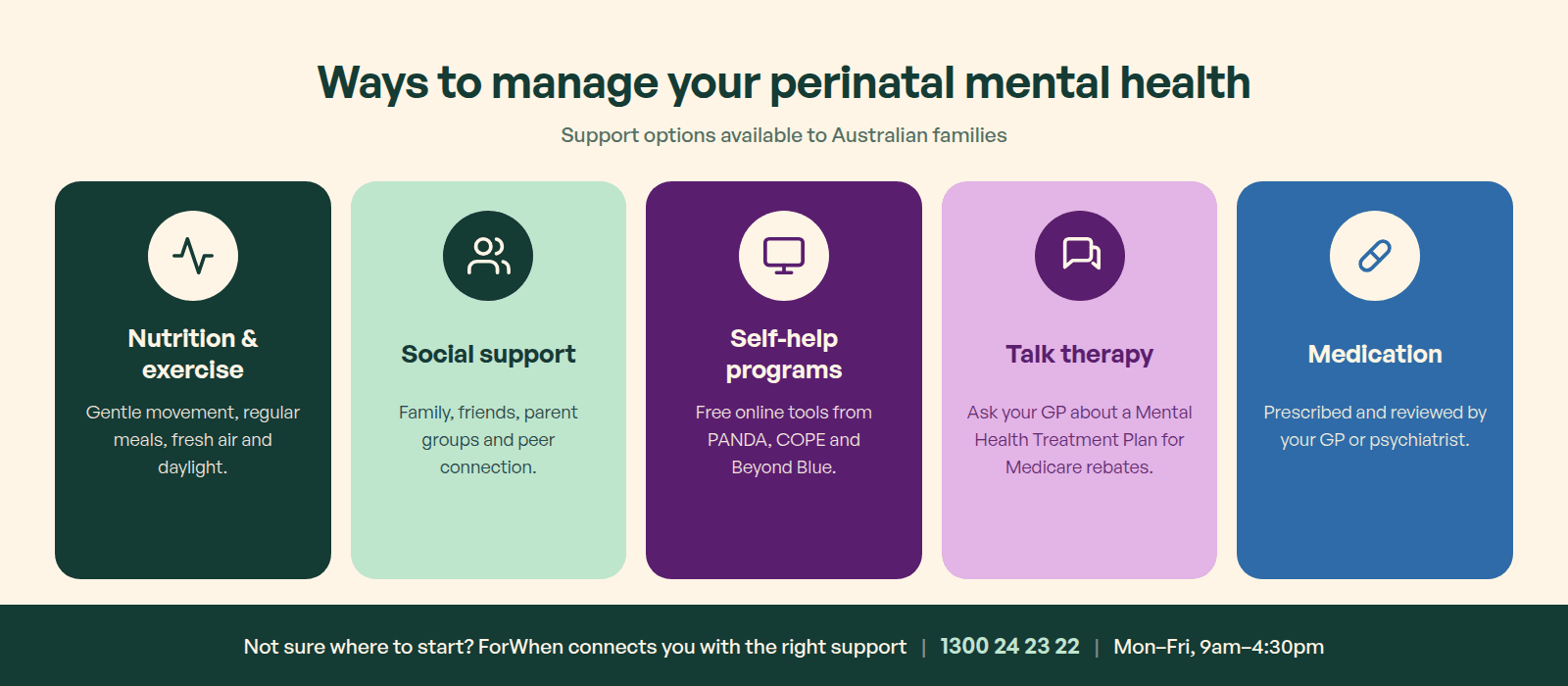
Mental health conditions such as perinatal depression and anxiety can be treated several ways and it’s important to speak with a healthcare professional to explore which combination of treatment options may be most suitable for you.
- Nutrition and exercise
- Social support
- Self-help online programs
- Talk therapy
- Medication
How to get a mental health treatment plan
Mental Health Treatment Plans are available through General Practitioners (GPs) which, if eligible, will provide Medicare rebates for talk therapy appointments. ForWhen can help find you a counsellor or psychologist to connect with that matches your needs.
Your GP will ask you some questions regarding how you’ve been feeling and coping, and may complete with you an Edinburgh Postnatal Depression Scale (EPDS) or K10 tool to further understand your current mental health.
If you are not eligible for a Mental Health Treatment Plan, your ForWhen navigator can offer alternate support options.
Key Highlight
Medicare rebates are available for Mental Health Treatment Plans, which you can access through your General Practitioner.
Online advice
It is common for new parents to look for information online whilst pregnant or adjusting to parenting. This can become overwhelming with the thousands of websites available.
Here are some trusted sources. Additional options are available on the back of your baby’s Child Health Record.
Websites
- PANDA (Perinatal Anxiety & Depression Australia)
- COPE (Centre of Perinatal Excellence)
- Raising Children’s Network
- Beyond Blue
Helplines
- ForWhen – 1300 24 23 22
- PANDA (Perinatal Anxiety & Depression Australia) – 1300 726 306
- Lifeline Australia – 13 11 14
- 13YARN – 13 92 76
Prevention strategies that target parental mental health can help optimise the health of both parent and child.
You can also raise your mental health concerns with your local GP, midwife or obstetrician, or Child and Family Health Nurse for advice.
Pregnancy and early parenthood will be one of your biggest life experiences and full of surprises. You won’t always know what to do or have all the answers, but that’s okay. Learning takes time, patience and support.
Mother and wife to The Wiggles star Simon, Lauren Hannaford reflects on her own journey of parenthood and says: “You’re not alone. Ask questions. Talk about it and be there to support each other”.
Sources
- Australian Institute of Health and Welfare: Perinatal mental health screening in Australia: What is perinatal mental health?
- Pregnancy, Birth and Baby (healthdirect Australia): Mental wellbeing after pregnancy
- Pregnancy, Birth and Baby (healthdirect Australia): Fathers and depression
- Pregnancy, Birth and Baby (healthdirect Australia): Baby blues
- healthdirect Australia: Postnatal depression
- healthdirect Australia: Making decisions about unplanned pregnancies
- Better Health Channel, Victorian Department of Health: Pregnancy: morning sickness
- Australian Institute of Health and Welfare: Pregnancy loss in Australia: a data scoping study (PDF)
- PANDA: How common are mental health issues in the perinatal period?
- PANDA: Planning a baby after perinatal anxiety, depression or postnatal psychosis
- PANDA: Support after pregnancy loss
- COPE (Centre of Perinatal Excellence): Postnatal depression
- The Royal Australian College of General Practitioners: Smoking in pregnant women
- Journal of Developmental Origins of Health and Disease, Cambridge University Press: Maternal psychological distress during pregnancy and childhood health outcomes: a narrative review
Frequently Asked Questions
See our answers below to commonly asked questions we receive about the psychological changes during pregnancy.
Not always, factors like a history of mental health conditions, lack of social support or major life stressors can impact. Building a support network early in pregnancy can help. Call ForWhen to talk about what may help you.
Yes, men and women with a previous history are at higher risk, but proactive screening and planning can help. If you’re planning another pregnancy, ForWhen navigators can help you prepare.
Look for subtle changes like withdrawal or persistent worry. Offering non-judgmental listening and practical help (e.g. shared chores) is key. We have a great guide with strategies to help.
Baby blues are short lived feelings of tearfulness or overwhelm that affect up to 80% of new mums in the first 3 to 5 days postpartum and often resolve on their own. Perinatal depression is a more serious condition that can start during pregnancy or after birth, involving deeper sadness or disinterest that lasts longer and may need professional support. If symptoms continue for more than 2 weeks, consider accessing help.